

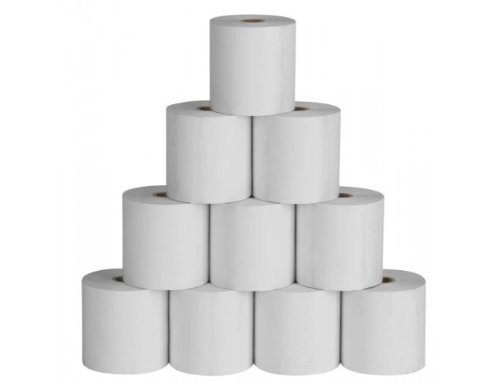
Common Receipt Roll Sizes Explained
Choosing the correct receipt roll size is essential for ensuring reliable printing and avoiding problems with tills, card machines, EPOS systems and adding machines. While receipt rolls may look similar, they are available in a range of widths and diameters designed to fit specific equipment.
Understanding the most common receipt roll sizes can help businesses order the correct products and avoid unnecessary downtime.
Why Receipt Roll Sizes Matter
Using the wrong receipt roll can cause a variety of issues, including:
-
Poor print quality
-
Paper jams
-
Feeding problems
-
Reduced printer performance
-
Incompatibility with equipment
- They just won't fit
Before ordering receipt rolls, it is important to check the size required by your machine.
Understanding Receipt Roll Measurements
Receipt rolls are typically measured using three key dimensions:
Roll Width
The width refers to the paper width measured in millimetres (mm).
Common widths include:
-
44mm
-
57mm
-
76mm
-
80mm
The width must match the specifications of the printer or terminal.
Roll Diameter
The diameter is the overall size of the roll when viewed from the side (measure across the circle).
Larger diameters generally contain more paper and require less frequent replacement.
Core Size
The core is the cardboard centre of the roll. When measuring, measure the hole only (do not include the cardboard inner).
Some machines require specific core sizes to ensure correct operation while others sit loosing in a void.
Common Till Roll Sizes
Till rolls are widely used in retail shops, hospitality venues and service businesses.
Popular till roll sizes include:
-
57mm x 40mm
-
57mm x 57mm
-
80mm x 80mm
These sizes are commonly used in cash registers and EPOS systems.
Common Card Machine and PDQ Roll Sizes
Card payment terminals often use smaller thermal receipt rolls.
Common PDQ roll sizes include:
-
57mm x 40mm
-
57mm x 38mm
Many modern card machines use thermal paper to print transaction receipts quickly and efficiently.
Common Adding Machine Roll Sizes
Adding machines and printing calculators continue to be used by accountants, finance departments and businesses that require printed calculation records.
Common sizes include:
-
57mm calculator rolls
-
Narrow adding machine rolls
-
Standard accounting machine rolls
Always check your machine specifications before ordering replacement rolls.
Thermal vs Non-Thermal Receipt Rolls
In addition to size, businesses should also confirm whether their equipment requires thermal or non-thermal paper.
Thermal Receipt Rolls
Thermal rolls:
-
Require no ink or ribbon
-
Print using heat-sensitive paper
-
Are commonly used in card machines and EPOS systems
Non-Thermal Receipt Rolls
Non-thermal rolls:
-
Usually require an ink ribbon
-
Are commonly used in some calculators and older printing devices
Choosing the correct paper type is just as important as selecting the correct size.
How to Identify Your Existing Receipt Roll
If you are unsure which roll you need, the easiest method is to check the roll currently installed in your machine.
Look for:
-
Width measurement
-
Diameter measurement
-
Core size
-
Thermal or non-thermal paper type
Many manufacturers also provide compatible roll information within their equipment documentation.
Ordering Receipt Rolls for Your Business
Businesses that use tills, card machines, calculators or EPOS systems often benefit from purchasing receipt rolls in larger quantities. Maintaining adequate stock levels helps prevent interruptions and ensures equipment remains operational when needed.
Whether you require till rolls, PDQ rolls, card machine rolls or adding machine rolls, selecting the correct size is essential for reliable performance.
Frequently Asked Questions
How do I know what receipt roll size I need?
Check your equipment manufacturer's specifications or measure the width, diameter and core size of the existing roll.
What is the most common receipt roll size?
Common sizes include 57mm x 40mm and 80mm x 80mm, although requirements vary depending on the equipment.
Are till rolls and PDQ rolls the same?
They are similar but may differ in size and application. Always check compatibility with your specific machine.
What is the difference between thermal and non-thermal receipt rolls?
Thermal rolls use heat-sensitive paper and require no ink, while non-thermal rolls generally require an ink ribbon for printing.
If you are having difficulty identifying the correct roll for your machine, please contact one of the knowledgeable office 5Star team.
View our guides on Receipt Rolls Duplicate Books Archive Storage Boxes
Shop Tally Rolls and Receipts Technology Cables and Adaptors
